
I’m happy to share that, together with colleagues from Humboldt-Universität zu Berlin and other universities, we have launched the Geomodalities Working Group, now officially part of the Integrative Research Institute on Transformations of Human-Environment Systems (IRI THESys). IRI THESys is an inter- and transdisciplinary research institute that brings together scholars from geography, anthropology, agricultural economics, philosophy and other fields to study land, water, energy, food, and climate under conditions of rapid environmental change.
From Landscapes of the Anthropocene to Geomodalities
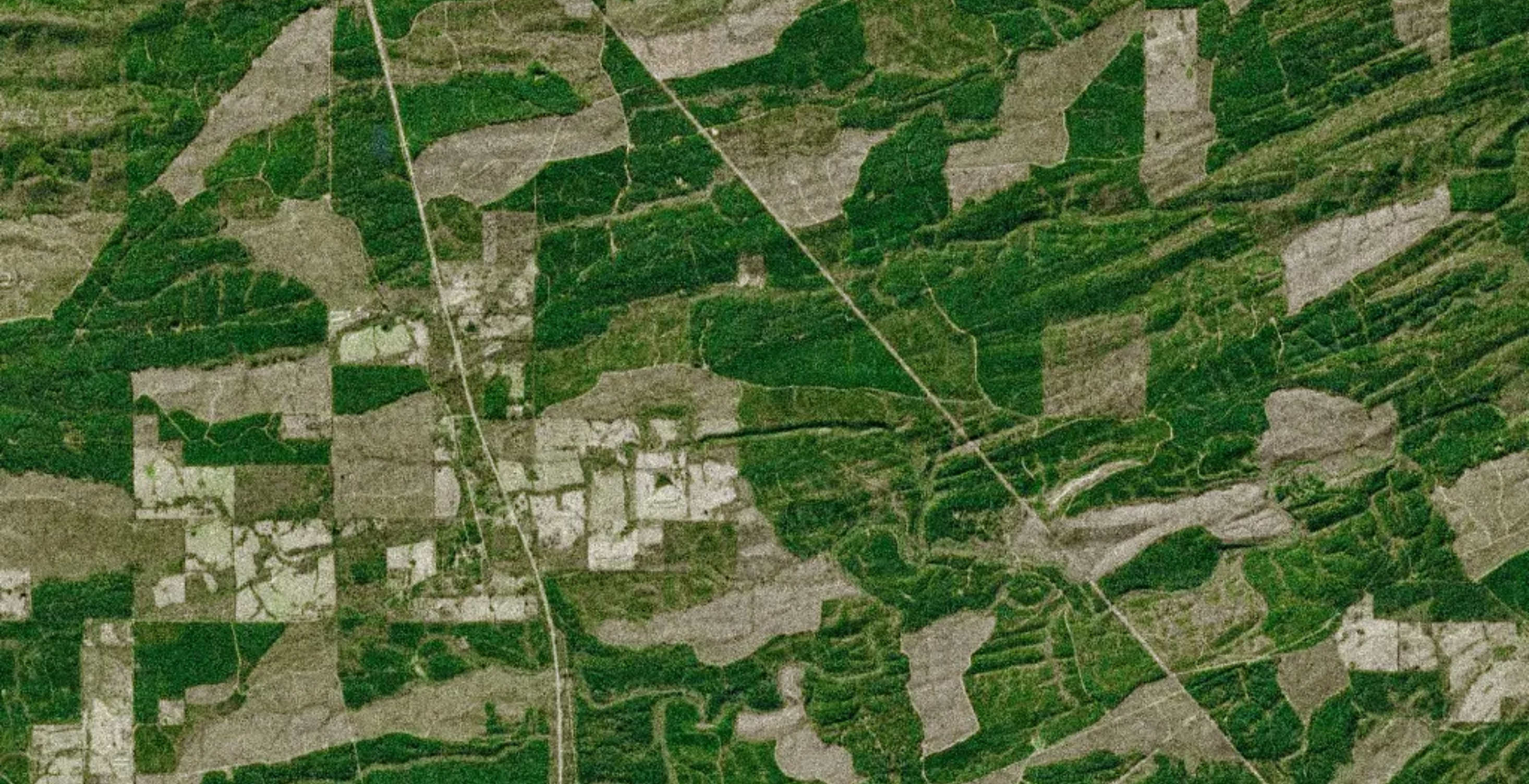
Geomodalities grows out of our earlier collaboration around Landscapes of the Anthropocene, where we worked with satellite images as a visual archive of large-scale transformations of the Earth—mines, solar parks, monocultures, infrastructures. That initial project quickly became a collective space to think about remote sensing as an ethnographic and geographical method, and to ask how orbital perspectives intersect with grounded fieldwork.
As the group evolved, it became clear that remote sensing was only one modality among many. Our conversations began to weave in soundwalks, annotated walks, collaborative mapping, multispecies cartographies, municipal open data, water infrastructures, zines, and small exhibitions. The name Geomodalities emerged to hold this widening set of practices: a broader umbrella under which different projects, materials, and methods could find a shared language.
What we mean by “Geomodalities”
On the IRI THESys website, we describe Geomodalities as “an experimental space at IRI THESys for thinking and working with human–environment relations across scales.” We start from a simple proposition: every map, satellite image, sensor dataset, walk, or story is not just a neutral representation, but a way of composing the world. We use the term geomodalities to name these different modes of sensing, registering, and intervening in environmental realities.
Our interests range from remote sensing and geospatial data to ethnographic fieldwork, collaborative mapping, soundwalks, zines, and small exhibitions. We are especially attentive to the ethical and political stakes of geodata—questions of visibility and invisibility, data justice, refusal, and the risks of surveillance in environmental governance.
Three axes of our work: multimodal, open, inventive
In earlier presentations, we have sketched Geomodalities along three transversal axes:
- Multimodal – We bring together sensory, material, and technical modes of inquiry. A soundwalk, a satellite reading, a smell log, or a residue trace do not speak about the same world, even when they refer to the same place. Our task is not to force them into a single, seamless picture, but to invent correspondences between these partial worlds.
- Open – For us, openness is less about simply publishing data layers and more about designing infrastructures of care, traceability, and repair. Any map or dataset should make visible who did what, under which agreements, and with what possibilities for withdrawal, correction, or refusal.
- Inventive – We treat methods as prototypes rather than fixed recipes. A mapping kit, a guided walk, or a protocol for reading satellite images are speculative devices that stage possible worlds. Inventiveness, here, means owning that world-building power and making it reusable, modifiable, and open to critique by others.
How the working group functions
The Geomodalities Working Group meets monthly in a hybrid format and operates as a combination of reading group and methods lab. Sessions may involve:
- discussing theoretical and methodological texts;
- sharing works-in-progress (thesis chapters, mapping experiments, datasets, visual materials);
- collectively prototyping geomodal methods and formats such as collective atlases, annotated datasets, field guides, soundwalks, zines, small exhibitions, and digital/physical maps.
Our aim is to build a common vocabulary between anthropology, geography, and related fields, and to create a hospitable space where people can test ideas at an early stage, without needing a polished “end product” in advance.
Invitation
We imagine Geomodalities as both a name and an excuse: a way to reorganize a shared space for thinking about how different media and methods shape human–environment research across scales. New members from any institution and discipline are welcome—whether you already work with maps, satellite images, sensory and multimodal methods, or are simply curious about how geomodal approaches might inform your own research or collaborations.