
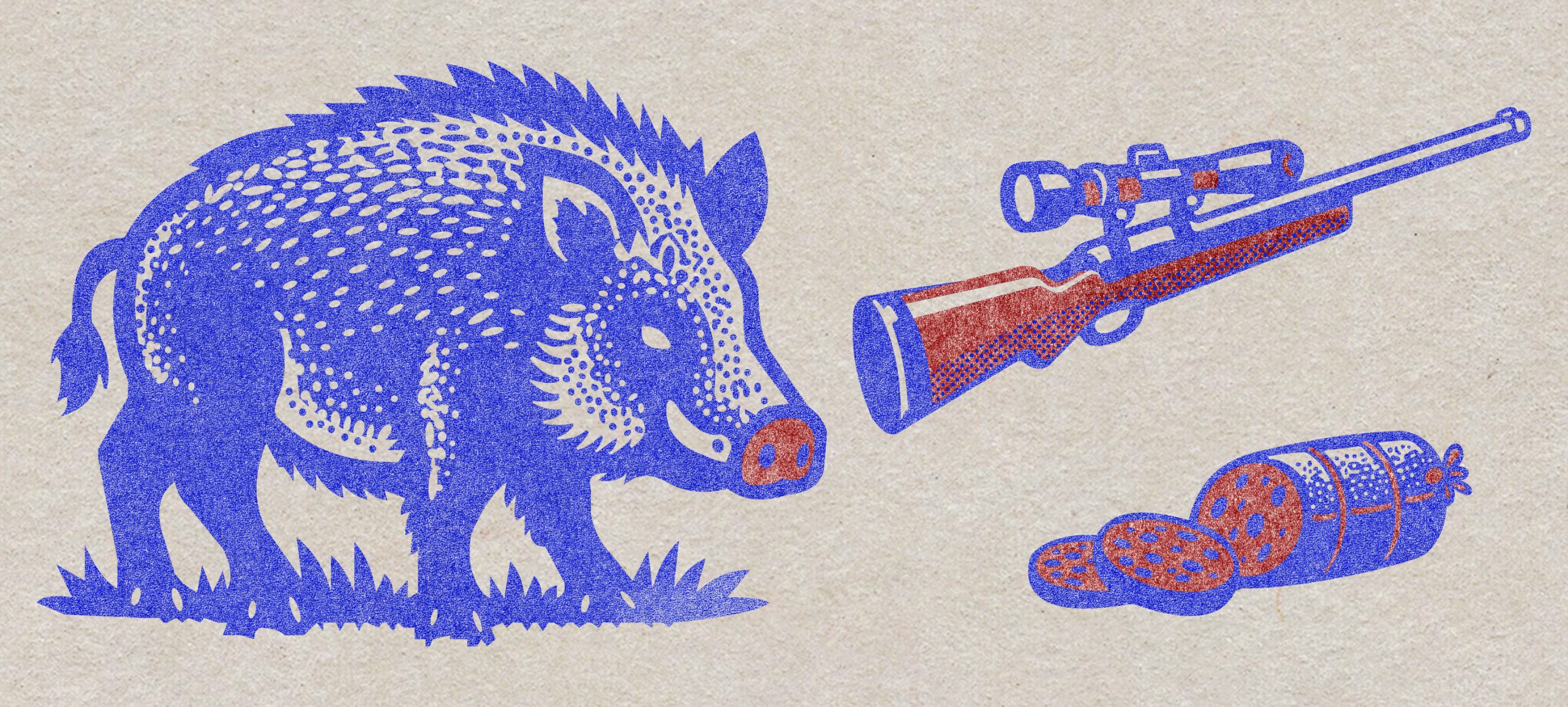
I am currently developing a new research strand within Specimenography Studies: a Cartography of Controversies on the Wild Boar in Catalonia. This project extends my broader work on pig afterlives and the politics of what persists by following a figure that has become increasingly central to public debate in the region: the wild boar.
In my recent entry on pig afterlives, I argued that the key question is not only what happens to pigs while alive, but how they persist afterward through residues, infrastructures, disputes, measurement regimes, and environmental conflict. That project asks how industrial life continues materially and politically through what remains: slurry, odors, carcasses, papers, samples, and other fragments that do not simply disappear. This controversy map moves that question into a more specific and highly visible terrain, where the wild boar emerges not as a marginal animal but as a multispecies public actor entangled with farming, forests, disease surveillance, hunting, urban proximity, and biosecurity.
The recent African Swine Fever (ASF) outbreak did not create this controversy from scratch. Rather, it intensified and reconfigured an already existing field of tensions. ASF turned the wild boar into an even more charged figure: a potential vector, a target of control, an object of scientific scrutiny, and a site where fears about contagion, overabundance, governance, and ecological spillover become newly concentrated. What was already a contested issue in Catalonia has become sharper, more urgent, and more publicly legible.
So far, I have collected 116 sources, and the archive continues to grow. I am building this corpus as an evolving controversy map: a way of tracing how the wild boar is assembled differently across media reports, government interventions, veterinary discourse, hunting voices, environmental concerns, animal advocacy, and scientific claims. My interest is not to settle the debate, but to follow how this animal becomes a problem, for whom, through which devices, and with what consequences.
This work is also part of a larger methodological commitment. If specimenography is a way of working with fragments that condense wider relations, then controversy mapping offers one way of tracking how those fragments circulate publicly. In this case, the wild boar is not only an animal in the forest or at the edge of the city. It is also an epidemiological signal, a policy object, a media protagonist, a governance challenge, and a more-than-human figure through which broader tensions around pig farming and environmental harm become visible.
You can explore the growing source archive here: