
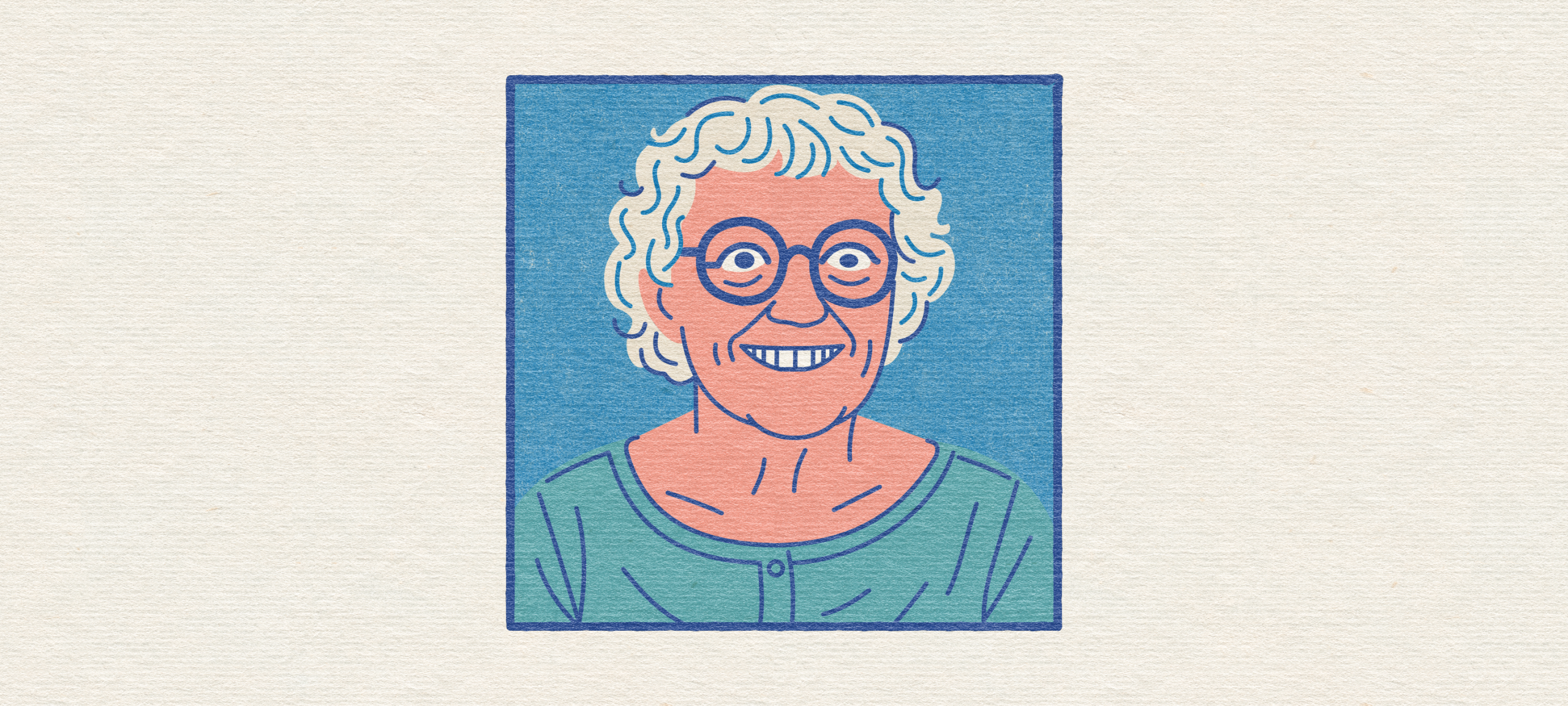
From The Companion Series
Annemarie Mol taught me that realities do not simply coexist—they are enacted. When I first read The Body Multiple(Mol 2002), I felt something shift in how I understood both ethnography and the world it studies. Her analysis of atherosclerosis at a Dutch hospital does not reveal a single disease but many: a clinical disease, a pathophysiological disease, an embodied disease—all enacted through different practices, instruments, and routines. This was not relativism; it was empirical philosophy—a way of thinking that begins in the middle of things, tracing how realities are done. Mol showed that multiplicity is not an abstract idea but a practical condition, woven into the textures of everyday knowledge-making. That insight became foundational for me: fragmentography, specimenography, and my multispecies work all hinge on the recognition that what we call “one” is often many.
What struck me in Mol’s work is that she never treats multiplicity as a problem to be solved. Instead, she looks at how people handle it, coordinate it, and sometimes fail to bridge its gaps. In The Body Multiple, doctors, technicians, and patients continuously negotiate between versions of the disease, aligning them just enough for treatment to be possible. Coordination is not synthesis; it is a fragile craft. This attention to practice—to what people do rather than what they believe— resonates deeply with my own attempts to understand fragments in markets, kitchens, farms, and cities. Ethnography becomes not the search for hidden structures but the patient tracing of how worlds hold together (or don’t) through mundane actions: cutting, measuring, arranging, guessing, adjusting. Mol’s method taught me to chase these gestures with care.
Her later book, Eating in Theory (Mol 2021), radicalized this sensibility. There, she argues that to theorize eating one must begin with the act of eating itself—with chewing, digesting, feeding, preparing, sharing. Eating is not a metaphor but a material relation; bodies and worlds meet through it. Here, Mol crystallizes what she calls empirical philosophy: a way of doing theory that stays close to situations, allowing concepts to arise from their textures rather than being imposed from above. This approach has profoundly shaped my own work, especially in projects that involve sensorial and material entanglements—pigs’ afterlives, plants in Bogotá, and urban fragments. Mol’s insistence that theory can be situated and material helped me see that ethnographic thinking grows out of practice, not away from it.
For my Studio Ethnography, Mol becomes a companion in thinking about multiplicity in practice. Fragments, specimens, residues, and urban remains are not simply partial pieces of a larger whole—they are enactments of different worlds in motion. A bone fragment in a butcher shop enacts a different world than the same bone in a biosecurity laboratory. A plant cutting in Bogotá’s market enacts different relations than the same plant in a herbarium. Rather than collapsing these differences, Mol encourages me to hold them open: to ask how practices compose realities, how gestures coordinate versioned worlds, and how ethnography can remain accountable to this multiplicity without seeking premature unity. Her work permits me to see fragmentation not as a lack but as productive plurality.
Mol’s writing also offers a lesson in tone and ethics. Her voice is modest, precise, patient—refusing grand proclamations in favor of careful description. In this sense, she becomes an aesthetic companion as well. Her sentences practice what they argue: they enact multiplicity through nuance, variation, and attentiveness to detail. To learn from Annemarie Mol is to learn to write with humility; to theorize with one’s hands in the material; to let the world’s multiple enactments shape the form of one’s arguments. She reminds me that ethnography’s task is not to stabilize reality but to follow its divergences—slowly, generously, empirically.
Hands-on exercise: Multiplicity Mapping
Choose a mundane object or process—a cup of coffee, a metro station, a neighborhood dog, a broken pipe. Identify three different practices through which it is enacted (e.g., drinking, cleaning, trading; or smelling, avoiding, photographing). Write a short paragraph for each enactment. Do not synthesize. Let multiplicity stay multiple. Then ask: how are these versions coordinated in practice? How do they diverge?
References
- Mol, Annemarie. 2002. The Body Multiple: Ontology in Medical Practice. Durham, NC: Duke University Press.
- Mol, Annemarie. 2021. Eating in Theory. Durham, NC: Duke University Press.
- Mol, Annemarie, Ingunn Moser, and Jeannette Pols, eds. 2010. Care in Practice: On Tinkering in Clinics, Homes and Farms. Bielefeld: Transcript.